A PERSONAL SPACE首页预览 · 内容待补充
HOME / PROFILE
Hi, I'm Hengji Gao (高恒基).
I graduated from the College of Finance and Statistics at Hunan University in June 2025 with a bachelor's degree in Financial Engineering. I am currently pursuing an MSc in Financial Engineering at the School of Data Science, The Chinese University of Hong Kong, Shenzhen, and expect to graduate in November 2027.
I am particularly interested in big data and data engineering. Since September 2026, I have been a Data Engineering Intern in Xunlei's voice social networking business unit, focusing on data warehousing. Previously, I interned in the same field with Xiaohongshu (rednote)'s commerce and innovation data team from February to July 2026.
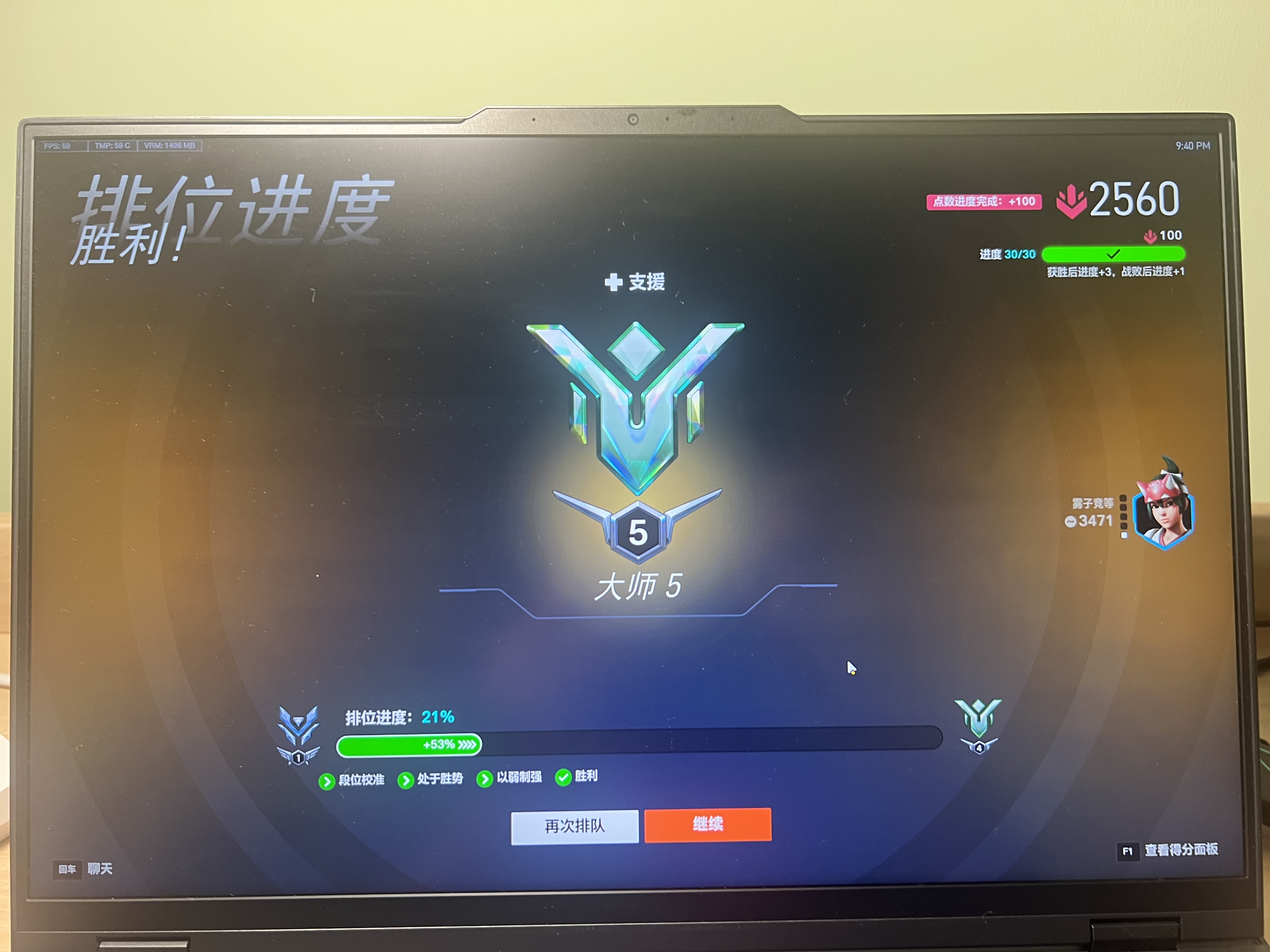
Outside of work and study, I enjoy badminton, cycling, hiking, brewing coffee, and gaming. I play first-person shooters, including Overwatch, where I peaked at Master rank in the support role. I also enjoy console games on PlayStation 5 and Nintendo Switch.
Explore my projects and CV, or get in touch by email.
Education & Experience
Education
The Chinese University of Hong Kong, Shenzhen
Master of Science in Financial Engineering
Sep 2025 – Nov 2027 (expected)
School of Data Science
GPA: 3.66 / 4.0
Hunan University
Bachelor's Degree in Financial Engineering
Sep 2020 – Jun 2025
College of Finance and Statistics
GPA: 3.78 / 4.0
Hunan University First-Class and Second-Class Scholarships
Experience
Data Engineer Present
Xunlei Networking Technologies · Internship
Sep 2026 – Present
Shenzhen, Guangdong, China · On-site
Voice social networking business unit · Data warehousing
Responsibilities & achievements
- Develop shared gaming data models and wide tables for multidimensional business metrics across four voice social networking products.
- Build transaction, retention, and churn metrics and user segments in the DWS layer; use WITH CUBE in the data mart layer for multidimensional analysis.
- Configure dependency scheduling, task alerts, and tiered data quality checks to meet a daily 9 a.m. data delivery SLA.
Data Engineer
Xiaohongshu (rednote) · Internship
Feb 2026 – Jul 2026
Beijing, China · On-site
Commerce and innovation data team
Responsibilities & achievements
- Optimized the industry benchmarking table for Mio advertising diagnostics, reducing runtime from 4 hours 14 minutes to approximately 1 hour 20 minutes.
- Built data pipelines for advertising campaigns promoting paid fiction content, connecting MySQL, Hive, Doris, and downstream APIs.
- Refactored a core wide table for Dandelion creator content by removing redundant fields, separating data models, and migrating downstream workloads.
- Created a reusable AI skill for product-testing recruitment analysis, automating data retrieval across sources, metric calculation, and report generation.
View projects ↗FICC Research
Huatai Futures · Internship
Mar 2025 – Jun 2025
Shenzhen, Guangdong, China · On-site
Skills
- Data Warehousing
- SQL · Layered warehouse architecture · Dimensional modeling · Metric development · Data quality monitoring
- Big Data
- Hadoop · Hive · Spark performance tuning; familiar with Kafka, Flink, Doris, and StarRocks
- Programming & Analysis
- Python · Pandas · NumPy · Matplotlib
- AI Workflows
- AI coding tools · Reusable AI skills · Automated data analysis and reporting
- Language & Test Scores
- CET-4: 588 · CET-6: 512 · TOEFL: 96 · GRE: 327
Projects
OnePage Gaming Metrics & Cube Tables
Built shared gaming data models and multidimensional wide tables for four voice social networking products—Wefun, FunUp, Higo, and Habi—to address fragmented business metrics, inconsistent definitions, limited analytical dimensions, and repetitive data retrieval. The models support daily monitoring, trend comparisons, and retention and churn analysis in the OnePage AI dashboard.
- Shared data models: Within the layered warehouse architecture, built gaming transaction metric tables at the user–game and user levels in the transaction domain's DWS layer, alongside a user-level intermediate table for gaming retention and churn. Consolidated atomic transaction metrics, retention and churn metrics, and user segment labels for reuse.
- Data mart development: Combined DWS metrics with user and game-type dimensions in the gaming subject area. Used WITH CUBE for multidimensional aggregation to build wide tables supporting cross-analysis by region, new versus existing users, game name, game type, and R-user segment.
- Reliability: Worked backward from a daily 9 a.m. SLA for core metrics to schedule upstream dependencies, reserve a one-hour incident recovery window, and configure task alerts. Applied tiered data quality checks (DQC) to tables and metrics throughout the production pipeline to ensure timeliness and accuracy.
- Results: Established reusable gaming data models so metrics could be produced once and consumed across multiple use cases, reducing duplicate development and metric reconciliation. Enabled regional comparisons, game performance evaluation, segmented user operations, and retention and churn analysis. SLA and DQC controls support reliable daily OnePage updates and provide standardized, traceable data for dashboards and AI-driven queries.
Aurora–Mio Advertising Diagnostics: Industry Benchmark Optimization
Optimized the industry benchmarking table used by Mio advertising diagnostics. The table aggregates advertising delivery records to the post level, then calculates high-precision p10–p90 percentiles for 36 metrics—including spend, impressions, clicks, conversions, and the bidding funnel—across four industry/category groupings, providing peer benchmarks for performance diagnosis and optimization recommendations.
Runtime: 4 h 14 min → approximately 1 h 20 min
- Diagnosis: Used Spark WebUI to identify two bottlenecks. Stage 0 aggregated approximately 11 billion delivery records with 186 tasks, generating 22.6 TB of memory spill. Stage 11 took 3 hours 31 minutes to compute high-precision percentiles across four groupings using GROUPING SETS. The Expand operator replicated each row four times, requiring each task to maintain 144 aggregation states.
- Optimization: Used DISTRIBUTE BY post ID to balance the intermediate table and downstream workload. Replaced GROUPING SETS with four independent GROUP BY queries combined through UNION ALL, reducing aggregation states per task from 144 to 36.
- Results: Preserved the accuracy parameter of 100000, output schema, and business definitions. Reduced total runtime from 4 hours 14 minutes to approximately 1 hour 20 minutes and resource consumption from 17,676 to 7,938 GB-hours (55% lower), substantially reducing spill, garbage collection pressure, and out-of-memory risk.
Aurora: Advertising Data Pipelines for In-App Fiction
Built a mapping pipeline between paid fiction content in the community and monetized series to support advertising for in-app fiction. The pipeline enables post recommendations on Aurora and filtering of eligible posts by series in the post-selection panel.
- Business definitions: Investigated data sources and retrieval rules linking three paid-content post formats—individually paid posts, free chapters within paid collections, and reference posts—to series. Validated enum distributions, null rates, and the one-to-one relationship between posts and payment types, then defined field boundaries, fallback strategies, and filtering conditions.
- Warehouse ingestion: Integrated the backend MySQL table for monetized series and established MySQL-to-Hive synchronization. Developed an hourly ODS table and a daily series-information dimension table.
- Dimension modeling: Joined the full post base table with collection information, reference-post relationships, and series data. Consolidated complex business logic for paid-content formats and series relationships in a post-to-paid-series dimension table. Prefiltering for non-null series IDs and valid payment types reduced the 10-billion-row post dataset to 700 eligible records, enabling BroadcastHashJoin in the downstream application layer and reducing shuffle overhead.
- Downstream integration: Joined the new dimension to the hourly post-recommendation table and six Hive tables serving the post-selection panel, adding payment type and series ID fields. Synchronized these fields to primary and standby Doris instances and downstream APIs, enabling series-based recommendations and backend queries for the associated posts tab.
Dandelion Core Post Wide Table: Governance & Optimization
Refactored and migrated a cumulative post-level wide table in Dandelion's core data pipeline. Each daily partition contained approximately 4.63 billion rows and 431 fields, serving 59 downstream jobs with a runtime of approximately 70 minutes.
Average daily runtime: 70 min → 30–35 min
- Diagnosis: Spark UI showed that the final convergence stage of the main INSERT combined 17 SortMergeJoin operations, with 4.8 TB of shuffle reads, 19.6 TB of memory spill, and 3.9 TB of disk spill. Executor heap usage repeatedly peaked at 86–95%, exposing the job to a high risk of out-of-memory failures.
- Field governance: Audited all 59 downstream jobs and classified the 431 fields by L1–L5 priority, deprecated status, and absence of references. For 117 L1 fields used only for StarRocks (SR) pass-through, checked SR views and production backend references a second time. Removed 102 redundant fields and retained 329 active fields.
- Model decoupling: Split the original wide table into a main metrics table for Hive, BI, and core reporting, and an extended metrics table for SR pass-through and view references. This reduced row width, upstream dependencies, and join complexity.
- Migration: Migrated downstream jobs in batches by priority, backfilled historical data, validated results, and decommissioned the original table.
- Results: Over the following seven days, average daily production runtime fell from 70 minutes to 30–35 minutes. Resource consumption decreased from 22,264 to 12,372 GB-hours (44% lower); total disk spill fell from 9.7 TB to 0.8 TB (92% lower), and memory spill from 219 TB to 94.8 TB (57% lower), restoring stable operation.
Dandelion Product-Testing Recruitment: A Reusable Data Analysis Skill
Built a reusable skill on Xiaohongshu's DIBP AI platform to help the operations team analyze periodic metric fluctuations, advertising value, and customer profiles for Dandelion's product-testing recruitment programs.
- Data foundations: Defined metrics and join logic across Dandelion task tables, post-traffic wide tables, advertising creative tables, and other underlying data sources.
- Analysis coverage: Built end-to-end data retrieval for industry-by-marketing-objective overviews, efficiency comparisons across four post types, breakdowns of key accounts versus small and medium-sized clients, top-20 benchmarking of representative clients, and potential customer profiling.
- Workflow automation: Packaged temporary-table creation, multi-table joins and data retrieval, efficiency metric calculation, Markdown report generation, REDoc document uploads, and HTML visualization reports into a reusable skill.
- Results: Enabled the operations team to trigger the workflow through natural-language requests and independently produce ad hoc analyses and routine weekly reports that previously required hours of work.
Notes
Notes on what I learn, and thoughts along the way.
Photos
Travel, everyday life, and moments worth remembering.
Contact
Feel free to get in touch about data engineering, data warehousing, and AI workflows.